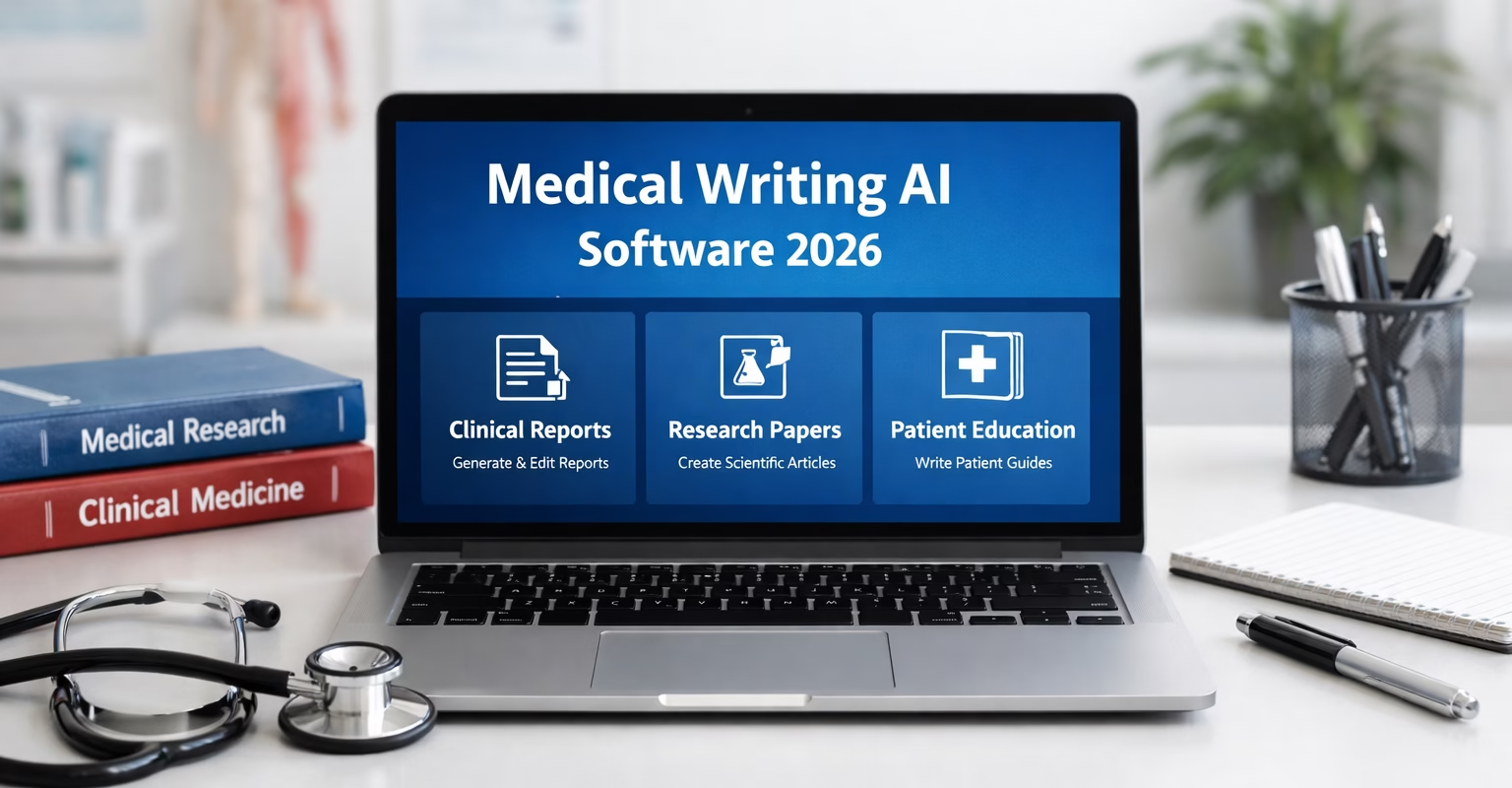
Looking for medical writing AI software? You found the right guide. This article shows you the best tools for 2026. We cover software for clinical reports. We cover tools for research papers. We cover FDA-compliant options. We cover free tools for students. Find your perfect medical writing assistant today.
Why Medical Writing Needs Special AI Tools
Medical writing AI software serves unique needs. Clinical writing demands perfect accuracy. Patient safety depends on correct information. FDA regulations require specific formats. Medical writing tools understand these requirements.
Healthcare terminology must be exact. Drug names need correct spelling. Dosage information requires precision. Medical conditions need proper descriptions. AI medical writing software checks all these elements.
Regulatory submissions follow strict templates. Clinical study reports need exact sections. Protocols require specific language. Medical writing AI knows these standards.
Time pressure in healthcare is real. Researchers need faster publication. Clinicians need clear patient materials. AI tools for medical writing accelerate quality work.
Top AI Tools for Clinical Research Writing
Finding the best medical writing AI software starts here. Clinical research needs special attention. These tools help.
Trinka.ai specializes in medical grammar. It knows clinical terminology perfectly. It checks drug name spelling automatically. It suggests accurate medical phrases. It ensures regulatory compliance. Try Trinka.ai for research papers.
Writefull focuses on academic medical writing. It suggests stronger scientific phrasing. It checks journal submission requirements. It improves publication chances. It compares your writing to published papers.
AMAI optimizes medical abstracts specifically. It analyzes successful published abstracts. It suggests improvements for clarity. It increases citation potential. It highlights key findings effectively.
GrammarlyGO Medical adds medical dictionaries to Grammarly. It checks medical terminology accuracy. It verifies dosage information. It ensures consistent drug naming. It maintains professional tone.
Paperpal prepares manuscripts for journal submission. It checks formatting requirements. It suggests better titles and abstracts. It improves literature review sections. It increases acceptance rates.
Regulatory Document AI Assistance
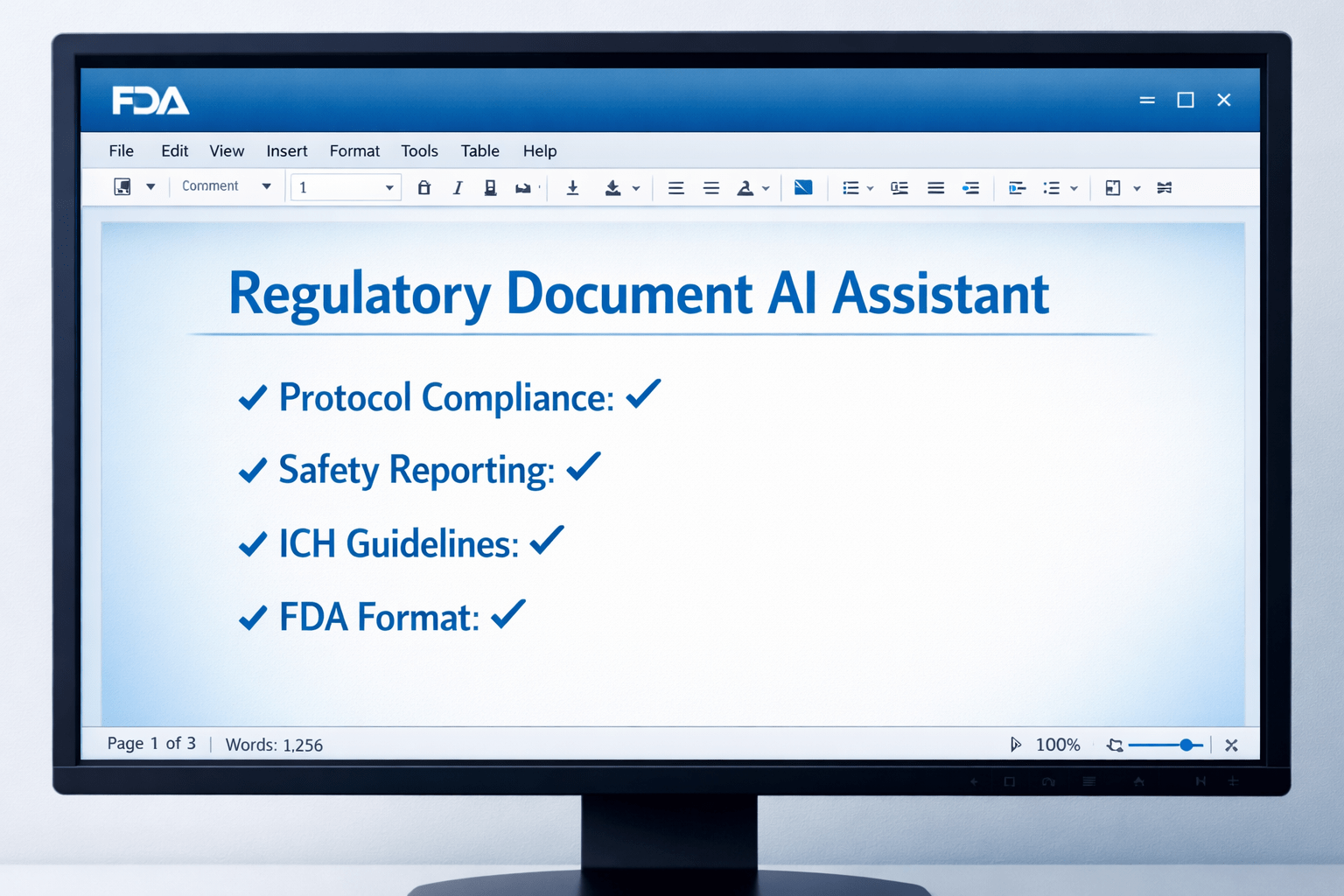
Your medical writing AI software must handle regulatory documents. These documents need perfection.
Clinical Study Report tools ensure ICH E3 compliance. They format reports correctly. They include all required sections. They check statistical consistency. They verify data accuracy.
Protocol development software suggests standard sections. They include required ethical statements. They format according to FDA templates. They incorporate safety monitoring plans. They save weeks of manual work.
Informed consent form generators use plain language properly. They ensure Grade 6-8 reading level. They include all required elements. They protect patient rights. They improve comprehension and consent.
Safety report automation monitors adverse events. It formats safety reports correctly. It calculates incidence rates. It compares to expected frequencies. It prepares for regulatory submission.
For example, use specialized software for FDA submissions. These tools include FDA template libraries. They check 21 CFR Part 11 compliance. They ensure electronic signature validity. They prepare for audit readiness.
AI for Patient-Facing Medical Content
Medical writing AI software creates clear patient materials. Health literacy matters greatly.
Health literacy optimization tools simplify complex information. They adjust reading levels appropriately. They replace medical jargon with plain language. They use familiar examples. They ensure patient understanding.
Patient education material generators create clear content. They use appropriate visual aids. They include action steps. They provide reassurance messages. They improve health outcomes.
Medication instruction tools explain usage clearly. They list side effects understandably. They provide warning signs to watch for. They include emergency instructions. They promote medication adherence.
Chronic disease management content explains conditions simply. It provides self-care strategies. It lists symptom monitoring methods. It offers lifestyle modification tips. It empowers patients.
Discharge summary generators create clear after-care instructions. They use simple language. They highlight warning signs. They provide follow-up information. They reduce readmission rates.
HIPAA-Compliant AI Writing Solutions
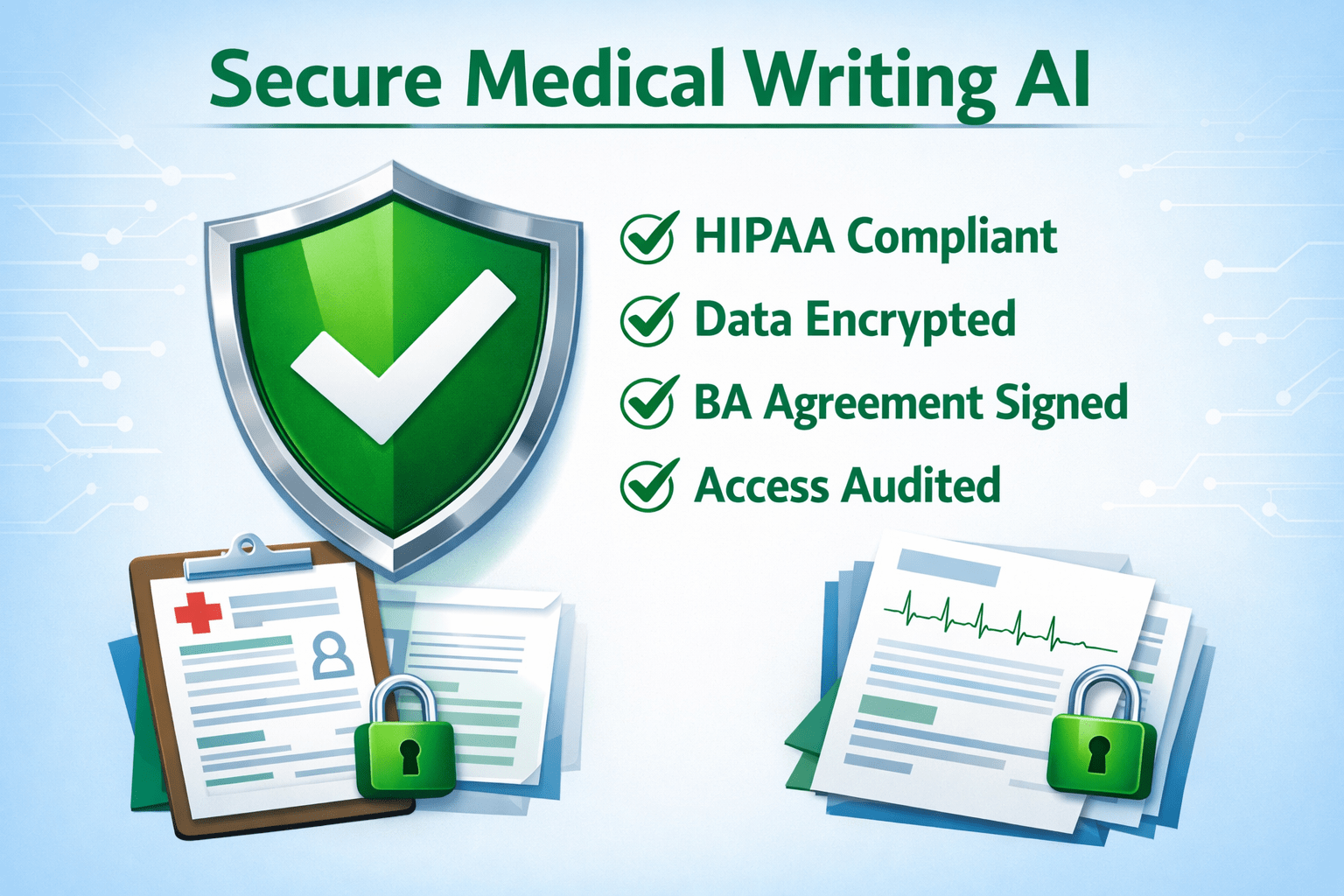
Patient privacy regulations demand security. Medical writing AI software must protect data.
HIPAA-compliant AI tools sign Business Associate Agreements. They encrypt all data properly. They audit access logs regularly. They provide data breach notification. They meet healthcare security standards.
On-premise solutions keep data local. They process information internally. They never send data to external clouds. They integrate with hospital EHR systems. They satisfy institutional review boards.
De-identification tools remove protected health information. They replace names with codes. They generalize dates and locations. They maintain data usefulness. They enable research sharing.
Secure collaboration platforms allow team medical writing. They control access permissions. They track document changes. They maintain version history. They ensure regulatory compliance.
For healthcare organizations, consider our guide to Best AI Tools for Business Writing 2026 for team solutions.
Free Medical Writing AI Tools for Students
Many free medical writing AI tools exist today. Medical students can write quality papers without cost.
Grammarly Free handles basic medical writing. It checks grammar and spelling. It suggests clearer phrasing. It improves readability. It maintains professional tone.
ChatGPT Free Tier helps with medical concepts. Use it for study note organization. Use it for concept explanation. Use it for differential diagnosis practice. Use it for research idea generation.
Zotero Medical manages medical references perfectly. It formats AMA citations automatically. It organizes clinical trial references. It links to PubMed directly. It creates bibliographies instantly.
Google Scholar AI features find medical literature smartly. They suggest related papers intelligently. They highlight key findings automatically. They connect studies thematically. They update search results regularly.
Medical dictionary integrations work with writing tools. They provide accurate definitions. They suggest proper terminology. They check abbreviation usage. They ensure consistency.
Your medical school may offer more free medical writing tools. Check your university library website. Ask your department chair. Email your research office. Explore institutional subscriptions.
Cost of Professional Medical Writing AI
The cost of medical writing AI software reflects professional needs. Plan your budget carefully.
Free tools handle basic needs adequately. Grammarly Free fixes medical grammar. ChatGPT Free helps with concepts. Zotero organizes references at no cost.
Professional tools cost $50-$300 monthly. Trinka.ai Professional costs $150/month. Writefull for Teams costs $100/user/month. Specialized regulatory software costs more.
Hospital licenses provide significant discounts. Large health systems negotiate better rates. Academic medical centers get educational pricing. Group practices receive volume discounts.
Student discounts reduce prices greatly. Many tools offer 60-70% off for students. Always check for medical education pricing. Use your .edu email address for verification.
Consider time savings in your budget. Good medical writing software saves 20+ hours monthly. Calculate your professional hourly rate. The return on investment often justifies costs.
For budget-friendly options, explore our Best Free AI Tools for Academic Research in 2026 guide.
Implementation Workflow for Healthcare Teams
A good medical writing workflow with AI follows clear steps. Each step uses appropriate tools.
Step 1: Research Planning uses literature tools. PubMed AI features find relevant studies. Reference managers organize sources. Outline generators structure papers.
Step 2: Data Analysis employs statistical software. AI tools interpret clinical results. They format tables correctly. They generate appropriate visualizations.
Step 3: Draft Writing uses composition tools. Medical writing assistants suggest phrasing. Terminology checkers ensure accuracy. Readability tools simplify complex concepts.
Step 4: Regulatory Compliance applies specialized software. Format checkers verify guidelines. Template tools ensure completeness. Submission systems prepare packages.
Step 5: Team Review utilizes collaboration platforms. Version control tracks changes. Comment systems facilitate feedback. Approval workflows ensure sign-off.
Follow this medical writing workflow for consistent results. Adapt it for your specialty. Modify it for your institution. Perfect it for your team needs.
Common Medical Writing AI Mistakes
Avoid these medical writing mistakes with AI.
Do not use general tools for medical content. Medical writing AI software must understand healthcare context. General grammar checkers miss medical errors. Use specialized tools always.
Never skip human review of AI suggestions. Medical professionals must verify all content. AI can misunderstand clinical context. AI can suggest inappropriate treatments. Always apply clinical judgment.
Maintain professional medical voice in writing. AI sometimes sounds too casual. Medical writing requires formal tone. Rewrite AI suggestions appropriately. Keep professional standards.
Protect patient privacy with all tools. Ensure medical writing software has proper security. Never input identifiable patient information. Use de-identification processes. Follow institutional policies.
Do not ignore regulatory requirements. Different documents need different standards. Research papers follow journal guidelines. Regulatory submissions follow FDA rules. Patient materials need health literacy standards.
FAQs About Medical Writing AI Software
Q: Can AI write complete medical documents legally?
A: AI can draft medical documents with human oversight. Medical professionals must review and approve all content. AI assists writing but doesn’t replace clinical judgment.
Q: Which tool is best for FDA submissions?
A: Trinka.ai and specialized regulatory software work best for FDA submissions. They include template libraries and compliance checkers specifically for regulatory writing.
Q: Are AI tools HIPAA compliant?
A: Some medical writing AI software offers HIPAA-compliant versions. They sign Business Associate Agreements. They provide data encryption. Always verify compliance before use.
Q: Can students use these tools for medical school?
A: Yes, many medical writing AI tools offer student discounts. Free versions handle basic needs. Medical schools often provide institutional access to premium tools.
Q: How accurate is AI for medical terminology?
A: Specialized medical writing software maintains high terminology accuracy. They use updated medical dictionaries. They cross-reference with clinical databases. They learn from corrections.
Q: Do journals accept AI-assisted medical papers?
A: Most medical journals now accept AI-assisted writing with proper disclosure. Authors must describe AI tool usage in methods sections. Original research and analysis must be human-generated.
Start Your Medical Writing AI Journey
Begin your medical writing AI journey today. Follow these steps.
First, identify your primary writing task. Are you writing research papers? Creating patient materials? Preparing regulatory documents? Choose tools matching your needs.
Second, select 2-3 medical writing AI tools to test. Try one for grammar and terminology. Try one for reference management. Try one for document formatting. Compare results.
Third, implement tools in your current projects. Start with non-critical documents first. Learn software features thoroughly. Develop efficient workflows. Scale to important documents.
Fourth, track improvements in your writing. Measure time saved per document. Calculate error reduction rates. Assess feedback from reviewers. Adjust your tool selection accordingly.
Fifth, review our complete Best AI Writing Tools 2026 guide. Discover additional options. Stay updated on new tools. Continuously improve your toolkit.
Finally, remember professional responsibility. AI enhances medical writing quality. It doesn’t replace clinical expertise. Your knowledge guides tool usage. Your judgment ensures patient safety.
Your professional medical writing toolkit awaits. Start building today. Write with confidence tomorrow. Advance healthcare communication this year.





Leave a Comment
Your email address will not be published. Required fields are marked *
No Comments Yet
Be the first to share your thoughts!