

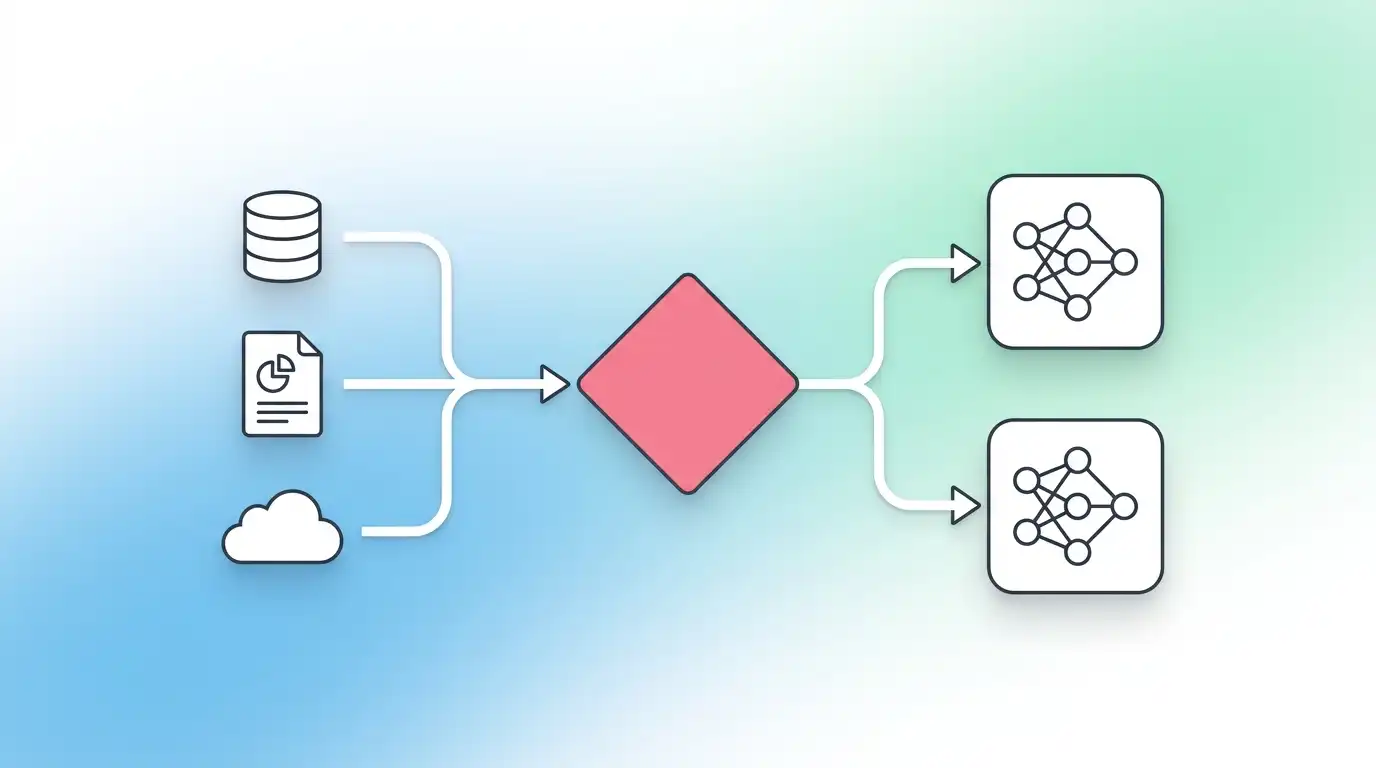
A practical, code-first guide to using TypeSafe AI's Jev model as a routing and decision layer inside Gemini/Groq agent pipelines, with a worked example, cost comparison, and failure modes.
Pricing and availability checked September 22, 2026. Vendor-reported figures are labeled as such throughout: treat them as claims to verify against your own workload, not settled benchmarks.
Quick answer: Jev is TypeSafe AI's System One model. It doesn't generate text, but instead returns typed decisions (a choice, a score, or a probability) from a block of state and a set of questions you define. In a Gemini or Groq agent pipeline, Jev belongs at key decision points (routing, severity, tool-approval, quality gating), while Gemini and Groq-hosted models stay responsible for anything that needs to be written or explained.
Is Jev an LLM you can just drop into a chat pipeline?
No. Jev doesn't generate prose, code, or explanations. It takes application state (text, JSON, or another structured object) plus typed questions, and returns structured answers: a Choice from a fixed list, a Score on a defined scale, or a Noul/Boolean-style probability, each with a calibrated confidence value. If your pipeline needs a written reply, a summary, or open-ended reasoning, that still comes from a generative model like Gemini or a Groq-hosted Llama model. Jev's role is upstream or alongside that, deciding what should happen before or after the generative step runs, not producing the output itself.
That distinction is the reason this guide exists. Most agent pipelines today make routing and classification decisions by prompting a full LLM and parsing its text output as JSON. That works, but it's slower than it needs to be, occasionally non-deterministic, and burns full generation tokens on what is really just a classification. Jev is purpose-built to replace that specific piece of the pipeline, not the whole thing.
What is a System One model, in one paragraph?
TypeSafe AI, the lab behind Jev, calls this category of model a "System One model", referring to Daniel Kahneman's distinction between fast, intuitive System 1 thinking and slow, deliberate System 2 reasoning. Rather than predicting text one token at a time, a System One model evaluates a state against a set of typed questions in a single parallel pass and returns the filled-in answers directly. Because the possible outputs are enumerated in advance (a fixed list of choices, a bounded score range, a probability), there's no free-text output to parse or fail on: the schema is enforced by construction rather than hoped for through prompting.

Where Jev actually fits in an agent loop
A typical Gemini- or Groq-based agent pipeline has a handful of recurring decision points that don't need creativity, only a correct, well-defined answer from a known set of options:
- Should this input be routed to Tool A, Tool B, or escalated to a human?
- Is this a high-risk action that needs approval before a tool call executes?
- What's the urgency or category of an incoming request?
- Is a generated draft good enough to send, or does it need a rewrite pass?
- Which of several available models or tools should handle this specific step?
Each of these is currently handled, in most pipelines, by asking the generative model to "respond only in JSON," then hoping the output parses cleanly at scale. Jev replaces that step with a dedicated call that returns a typed answer by construction: there is nothing to fail to parse, because the model is only permitted to fill in the schema you gave it.
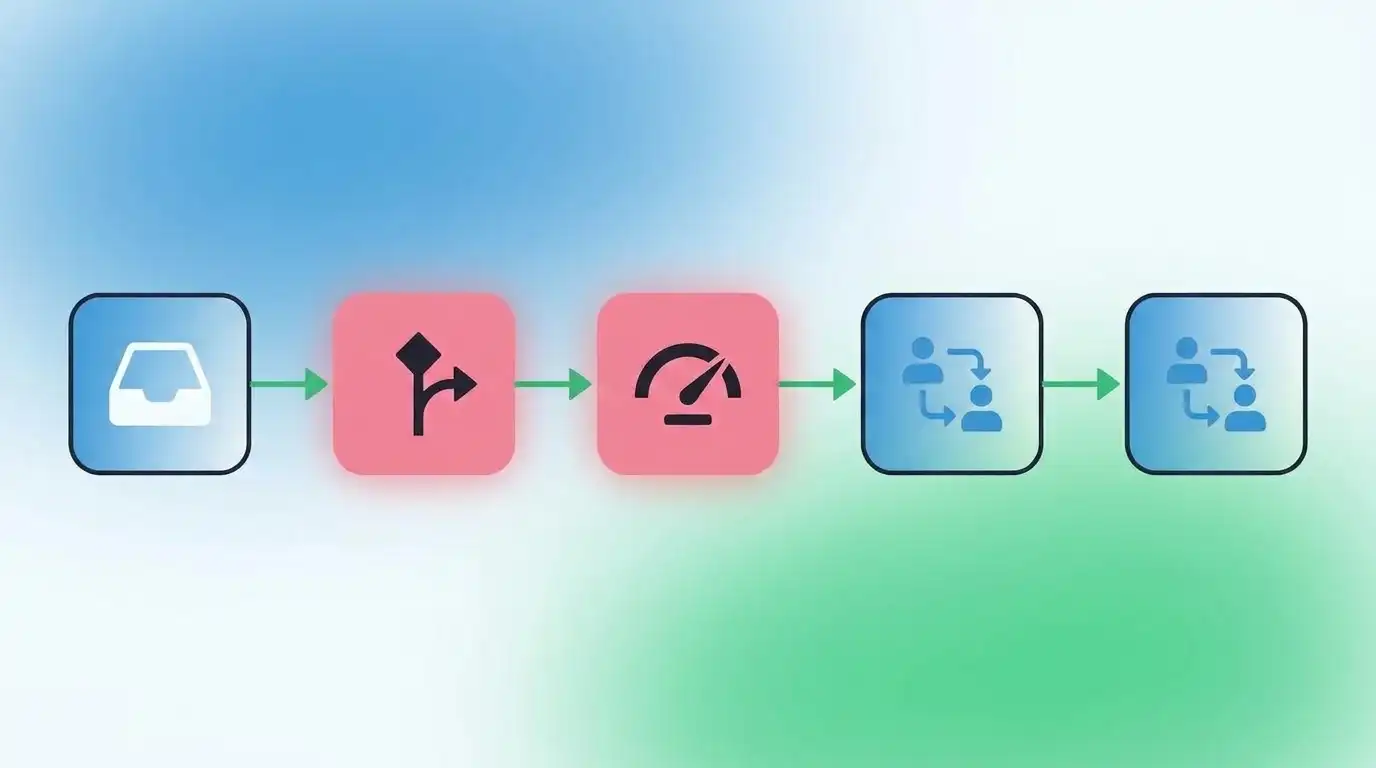
A worked example: routing before generation
Say you're running a multi-agent support pipeline where Gemini drafts the customer-facing reply and a Groq-hosted Llama model handles fast intermediate steps. Before either model touches the ticket, you want to know whether it's urgent and which team owns it.
{
  "state": "Customer says checkout has been failing for three days and they're losing sales.",
  "questions": {
    "is_urgent": {
      "type": "noul",
      "instructions": "Does this ticket require immediate attention?"
    },
    "team": {
      "type": "choice",
      "options": ["billing", "technical support", "account management"],
      "instructions": "Which team should handle this ticket?"
    },
    "severity": {
      "type": "score",
      "levels": ["low", "medium", "high", "critical"],
      "instructions": "How severe is the customer impact?"
    }
  }
}
The pipeline logic then looks roughly like this:
ticket → Jev (route + severity)
            ↓
    if severity ≥ high:
        Groq/Llama drafts a fast interim acknowledgment
            ↓
    Gemini writes the full response
            ↓
    human approval gate before send
Jev never writes a word of that response. It decides which model runs, how fast, and whether a human needs to sign off: the generative models stay focused on what they're actually good at: writing.

Multiple questions, one call
A detail worth building around: System One models evaluate every question in a request in parallel. Adding the is_urgent, team, and severity questions above to the same call barely changes response time versus asking just one: you only pay for the extra input tokens the additional questions require, not for additional round trips. That makes it cheap to ask several small, well-scoped questions about the same state rather than trying to cram one big judgment into a single field.
Jev vs. asking Gemini or Groq to classify via prompt
| Dimension | Jev | Prompting Gemini/Groq to classify |
|---|---|---|
| Output tokens billed | None (Jev has no text output; OpenRouter lists Jev 1.13 at $0.042 per million input tokens with free output) | Full generation tokens for the JSON reply, every call |
| Parsing risk | None: schema enforced by construction | Malformed or inconsistently-shaped JSON is a real failure mode at volume |
| Latency | Vendor/provider listings report low-hundreds-of-milliseconds or faster on classification-style tasks | A full model round-trip even for a one-field answer |
| Text generation | Not supported (by design) | Fully supported |
| Best use | High-volume routing, tagging, scoring, tool-approval checks | Writing, explaining, open-ended reasoning, anything needing a human-readable answer |
Treat the speed and cost figures above as vendor- and provider-reported, not independently benchmarked here. Actual numbers depend on your state size, question count, and which provider you route through (TypeSafe direct, OpenRouter, or a gateway such as Vercel AI Gateway).
Jev vs. GPT and Claude for classification tasks
A question worth answering directly, since it comes up whenever a non-generative model launches: Jev isn't a competitor to GPT or Claude for most work; it's a narrower tool for a narrower job.
- Text generation, summarization, code, open-ended reasoning: GPT and Claude-class models remain the right tool. Jev doesn't do any of this by design.
- Fixed-category classification at high volume: This is where Jev is built to compete. TypeSafe's own benchmark reports accuracy in the same range as mid-tier general-purpose LLMs on classification-style tasks, at a fraction of the cost and latency. That figure is self-reported and hasn't yet had wide independent replication, so validate it against your own dataset before relying on it in production.
- Explaining a decision in natural language: GPT/Claude again. Jev returns a typed answer and a confidence score, not a rationale.
The practical pattern most teams will land on is not "Jev instead of GPT/Claude" but Jev in front of GPT/Claude, using Jev to decide whether and how the generative model should be invoked at all.

Where this breaks down
Worth being upfront about, because a decision layer that fails silently is worse than not having one:
- Category design matters more than usual. Jev can only choose among the options you give it. If "technical support" and "billing" genuinely overlap for a given ticket, you'll get a confident answer to a question that didn't have a clean answer to begin with.
- Confidence isn't correctness. A high confidence score means the model was sure, not that it was right. Set a threshold, and route anything below it to a human or a fuller model check rather than trusting the score alone.

- Adversarial input is a real, reported concern. Coverage since launch has flagged that prompt-injection-style framing embedded in the state text can influence Jev's classification, the same way it can with any model reading untrusted input. Don't let a Jev decision alone authorize something irreversible (such as refunds, production changes, or account actions) without a second, deterministic check.
- It's genuinely not a chat model. If you find yourself wanting Jev to explain why it picked an answer, that's a sign the step needs a generative model instead, fed the decision as context rather than replacing it.
- Context limits vary by provider. OpenRouter's listing for Jev 1.13 shows a 32K context window, but other documentation describes different limits. Verify the current figure for whichever provider you're integrating against before you rely on it for large state objects.
How to call Jev: API access points
Jev is accessed through a dedicated Decisions API rather than a standard chat-completions endpoint, so a normal chat SDK will not work against it without adaptation. As of this writing, the practical integration paths are:
- TypeSafe's own API, documented in their quickstart.
- OpenRouter, listing
typesafe/jev-1.13with per-token pricing and provider-level latency figures. - LangChain, which exposes Jev through a
TypeSafeClassifierintegration. You pass state and questions to.invoke()and get typed classification results back instead of a chat response, which fits naturally into an existing LangChain agent graph. - Vercel AI Gateway, via the AI SDK's evaluation API, for teams already routing Gemini/Groq/other models through Vercel's gateway.
Frequently asked questions
Is Jev an LLM? Not in the conventional sense. Jev is TypeSafe AI's System One model, built to evaluate state and return typed decisions (a choice, score, or probability) rather than generate text.
Does Jev generate text? No. Jev has no text-generation capability by design. Any written output in your pipeline (replies, summaries, explanations) still needs to come from a generative model like Gemini, Claude, or a Groq-hosted LLM.
Can Jev replace ChatGPT or Claude? No, and it isn't designed to. Jev is a narrow decision layer for fixed-category classification and scoring. It's best used alongside a generative model, not instead of one.
How much does Jev cost? OpenRouter lists Jev 1.13 at $0.042 per million input tokens with no charge for output tokens, since it produces no text output. Actual cost in production depends on state size, question count, and call volume.
Can Jev be used with LangChain?
Yes. LangChain exposes Jev through a TypeSafeClassifier integration that plugs into .invoke() calls inside an existing agent graph.
Is Jev suitable for AI-agent security or tool-call approval? It can serve as one signal in a tool-approval gate (for example, flagging a tool call as high-risk before it executes), but it should not be the sole authorization check for irreversible actions, given reported sensitivity to adversarial or injected input in the state text.
Does Jev guarantee accurate decisions? No. A high confidence score reflects certainty, not correctness. Category design, input quality, and a human-review threshold for low-confidence or high-impact decisions all still matter.
The pattern to take away
If you're building agent pipelines on Gemini or Groq today, the useful mental model is: generative models write, Jev decides. Put Jev at every fork in your pipeline where the answer space is already known (routing, severity, tool-approval, draft-quality gating), and reserve your generation budget for the steps that actually need language.
Sources and further reading: TypeSafe AI's own launch documentation and API quickstart; OpenRouter's model listing for typesafe/jev-1.13; LangChain's integration guide for TypeSafeClassifier; Vercel's AI Gateway evaluation API documentation. Benchmark and pricing figures are attributed to these sources and should be re-verified against current documentation before being used in a production cost estimate.